


Table of Contents
- Kitchen Remodel Cost Ranges by Project Scope
- 10×10 Kitchen Remodel Cost: A Common Starting Point
- Kitchen Cabinet Installation Cost and Material Selection
- Countertop Materials and Appliance Investment
- Kitchen Remodel Timeline and Labor Costs
- Kitchen Renovation Budget: Planning for Hidden Conditions and Permits
- How to Get Accurate Estimates from Local Contractors
- Frequently Asked Questions
Last Updated: October 19, 2026
Kitchen Remodel Cost Ranges by Project Scope
A kitchen remodel cost depends on what you’re changing. Some homeowners refresh cabinets and countertops; others gut the space and reconfigure the layout. Scope drives timeline, labor, materials, and your final bill.
Knowing which tier fits your goals helps you budget accurately.
Basic Refresh and Cosmetic Updates
A basic refresh updates finishes without changing the kitchen’s bones. You keep cabinets in place, maintain existing plumbing and electrical, and focus on paint, hardware, and new countertops or flooring.
This tier works when your layout functions well but looks dated. Paint cabinets, swap hardware and backsplash, install new countertops, and add modern lighting, fresh without moving walls or utilities.
Basic refreshes typically involve:
- Cabinet refinishing or light refacing
- New countertop material installed over existing base
- Fresh paint on walls and trim
- Updated lighting and hardware
- New flooring (if not requiring major prep work)
The advantage is speed, lower labor costs, and no permits in most cases. Timelines run 2-4 weeks. Material choices still matter: laminate costs less than quartz, but quartz lasts longer and resists damage better.
Midrange Remodel with Layout Adjustments
A midrange remodel adds complexity. You might relocate the sink, adjust cabinet placement, or reconfigure the island. Plumbing and electrical work increases, but you’re not doing a complete gut.
This tier appeals to homeowners who want functional improvements alongside aesthetic updates, fixing workflow issues like an island that blocks the pantry.
Midrange projects typically include:
- Cabinet replacement with semi-custom or stock options
- New countertops with better materials
- Relocated plumbing or electrical for sink or appliance placement
- Updated appliances
- Flooring replacement
- Permits and inspections required
Labor costs rise because contractors manage more complex work, and you’ll need permits in most jurisdictions when you move utilities. Timelines extend to 6-10 weeks, and better materials and layout improvements typically add real value.
Full Gut Renovation and Luxury Remodels
A full gut renovation removes everything. Walls, cabinets, flooring, plumbing, electrical, all come out. You start with an empty box and rebuild according to your vision.
This tier is necessary for structural issues, severe damage, or unsalvageable layouts, and it’s chosen by homeowners who want a completely custom space with high-end finishes.
Full renovations typically involve:
- Complete cabinet and appliance replacement
- New plumbing and electrical systems
- Structural modifications (removing walls, adding islands)
- High-end countertop materials (quartz, marble, granite)
- Custom cabinetry options
- Professional-grade appliances
- Extensive permits and inspections
- Possible asbestos or lead paint abatement
This scope demands the most labor, time, and materials. Timelines run 12-16 weeks or longer, and costs reflect custom work, premium finishes, and multiple trades. Luxury remodels often add heated floors, wine coolers, custom lighting, and smart home features.
10×10 Kitchen Remodel Cost: A Common Starting Point
A 10×10 kitchen is one of the most common sizes, small enough to feel manageable but large enough to include prep, cooking, and cleanup zones.
Many homeowners use a 10×10 kitchen as a budget baseline.
A basic refresh of a 10×10 kitchen updates finishes without structural changes: stock cabinets, laminate countertops, and standard appliances keep costs lower.
The kitchen remodel cost for a 10×10 space scales with your choices: paint-grade cabinets cost less than stained wood, laminate less than quartz, standard appliances less than professional-grade.
Labor also varies by scope. A cosmetic update requires fewer hours than relocating plumbing or replacing electrical. Permits add time and cost when you’re moving utilities or changing the layout.
Kitchen Cabinet Installation Cost and Material Selection
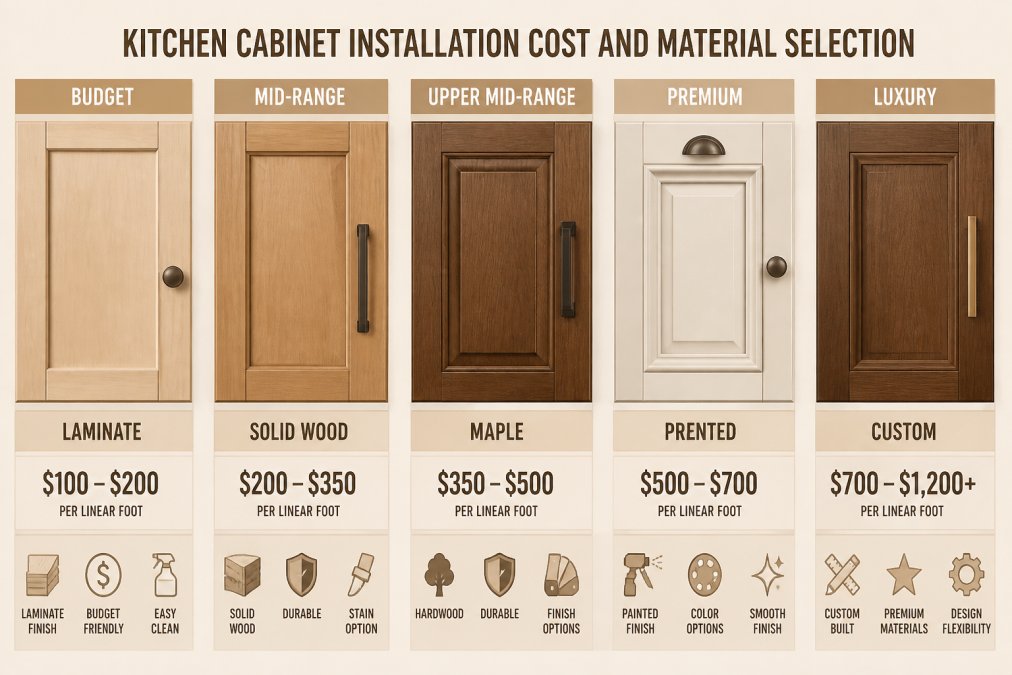
Cabinets are often the largest material expense in a kitchen remodel, setting the visual tone and anchoring the design. Cabinet choices shape both your budget and timeline.
Stock, Semi-Custom, and Custom Cabinet Options
Stock cabinets are pre-built in standard sizes and finishes. They ship quickly, cost the least, and install easily, though configurations are limited.
Semi-custom cabinets offer more flexibility. Widths, depths, and finishes can be adjusted within manufacturer ranges. Lead times extend to 4-8 weeks. Costs fall between stock and custom.
Custom cabinets are built to your exact specifications. Any size, wood species, finish, or hardware detail is possible. Lead times run 8-12 weeks or longer.
Stock cabinets work for basic refreshes when the layout stays the same. Semi-custom suits midrange remodels wanting better materials and some customization.
Refacing vs. Full Replacement Trade-Offs
Cabinet refacing keeps the existing boxes and replaces doors, drawer fronts, and hardware. It’s faster and cheaper than full replacement, and works when the structure is solid but the doors look dated.
The tradeoff: you can’t change the layout, add storage, or expand material choices beyond what fits your existing boxes.
Full replacement lets you reconfigure storage, add pull-out shelves, and choose better materials. It takes longer and costs more, but if your layout needs improvement, replacement is the better choice.
Countertop Materials and Appliance Investment
Countertops and appliances are the second and third largest expenses after cabinets, affecting both function and durability.
Countertop Choices: Laminate to Quartz
Solid surface (like Corian) offers a seamless look, resists stains, and can be repaired if scratched. Cost is moderate, between laminate and stone.
Granite is natural stone with unique veining, durable and heat-resistant, but it requires annual sealing and can stain if not sealed properly. Cost varies by color and origin.
Quartz is engineered stone made from crushed quartz and resin.
Butcher block (wood) adds warmth and character. It requires regular oiling and is vulnerable to water damage and heat.
Material choice depends on budget, maintenance tolerance, and how hard your kitchen works.
Professional-Grade Appliances and Fixture Costs
Professional-grade appliances deliver better performance and durability than standard models. They handle heavy use, heat more evenly, and last longer. The tradeoff is higher cost and sometimes more maintenance.
Standard appliances work fine for most households, reliable, efficient, and affordable. Professional-grade appliances suit homes where cooking is serious or resale value matters most.
Fixture upgrades include faucets with pull-down sprayers, instant hot water dispensers, and pot fillers. Better faucets last longer and resist leaks. Specialty fixtures add convenience but increase cost.
A basic refresh might keep existing appliances or swap in budget-friendly new ones. Midrange remodels often upgrade to better-performing models. Full renovations frequently feature professional-grade appliances paired with custom cabinetry.
Kitchen Remodel Timeline and Labor Costs
A kitchen remodel timeline depends on scope, permits, and how quickly materials arrive. Labor is typically the largest cost component after materials.
A basic refresh takes 2-4 weeks if no permits are needed.
A midrange remodel with plumbing or electrical work takes 6-10 weeks. Permits add 2-4 weeks to the timeline before work even starts. Once permits arrive, contractors coordinate multiple trades, electricians, plumbers, carpenters.
A full renovation takes 12-16 weeks or longer. Permits take longer for major work. Demolition, system replacement, and custom finishes all require time.
Labor costs vary by region and contractor experience. Complex work costs more per hour than straightforward installation. Experienced contractors often charge more upfront but deliver better results and fewer surprises.
Build 10-20% contingency time into your timeline estimate. Unexpected conditions, material delays, and permit processing always take longer than best-case scenarios.
Kitchen Renovation Budget: Planning for Hidden Conditions and Permits
Hidden conditions are the biggest budget wildcard. Once walls open up, contractors discover problems the previous owner never mentioned.
Structural Work, Plumbing, and Electrical Surprises
Rotted subfloors need replacement before new flooring installs. Outdated electrical wiring might not support modern appliances, panels need upgrading. Plumbing in old homes sometimes uses materials that corrode or fail. Asbestos or lead paint in pre-1980s homes requires professional abatement.
These discoveries add cost and time. A contractor can’t predict what’s behind walls without opening them, which is why experienced contractors build contingency into estimates.
The fix: set aside 10-15% of your budget for unknowns. If you don’t need it, great. If you do, you won’t panic or compromise on solutions.
Permits and Inspections in Your Area
Permits are required when you change plumbing, electrical, structural elements, or appliance locations. They’re not optional, and they’re not just paperwork, they protect your home and your safety.
Permit costs vary by jurisdiction. Some areas charge flat fees; others charge a percentage of the project cost.
Inspections happen at key stages: after framing, after electrical and plumbing rough-in, and after final installation. Inspectors verify work meets code. If something doesn’t pass, contractors fix it before moving forward.
Building codes exist for safety: bad electrical work causes fires, bad plumbing causes leaks, and bad structural changes compromise the home. Permits and inspections catch problems before they become expensive disasters.
Skipping permits to save money creates liability. If something fails and causes damage, your insurance won’t cover it. If you sell the home, unpermitted work can tank the deal. Always pull permits.
How to Get Accurate Estimates from Local Contractors
An accurate estimate requires clear communication about scope, materials, and expectations. Vague requests produce vague estimates. Detailed requests produce detailed estimates you can trust.
When you contact a contractor, provide:
- Photos of your current kitchen
- Sketches or descriptions of desired changes
- Your budget range (or that you’re open to hearing what things cost)
- Your timeline preferences
- Any specific materials or finishes you want
A good contractor visits your home, asks questions, and takes measurements. They don’t estimate from photos alone.
Compare at least three estimates. They won’t be identical, different contractors use different suppliers, labor approaches, and overhead costs.
Ask contractors to itemize their estimates. You should see:
- Cabinet costs (by type and quantity)
- Countertop material and installation
- Appliance costs
- Labor broken down by phase
- Permits and inspections
- Contingency allowance
ALVA RENOVATIONS LLC provides detailed estimates that break down every cost category.
Request references from past clients. Ask specifically about how the contractor handled unexpected issues, communicated during the project, and managed the timeline.
| Estimate Component | What to Look For | Red Flags |
|---|---|---|
| Itemized breakdown | Detailed line items for materials and labor | Vague categories like “miscellaneous” or “overhead” |
| Contingency allowance | 10-15% buffer for unknowns | No contingency mentioned |
| Material specifications | Exact brand, color, and grade | Generic descriptions like “quality countertops” |
| Timeline | Realistic phases with completion dates | Unrealistic timelines or no schedule |
| Payment schedule | Staged payments tied to milestones | Full payment upfront or lump sum at end |
| Warranty | Written warranty on work and materials | Verbal promises or no warranty |
A kitchen remodel cost in 2026 reflects your choices about scope, materials, and finishes. Basic refreshes update the look without major structural changes.
The most important step is getting clear estimates from experienced local contractors. We manage timelines carefully, communicate throughout the project, and handle unexpected conditions with transparency. Get a free estimate
Frequently Asked Questions
How much does it cost to renovate a 10×10 kitchen in 2026?
A 10×10 kitchen remodel cost depends on the scope. A basic cosmetic refresh with new finishes and hardware typically ranges lower, while a midrange remodel with some layout adjustments and new appliances costs significantly more. A full gut renovation with structural changes, new plumbing, and electrical work reaches the highest end. Get a free estimate from a local contractor to understand your specific situation and project requirements.
What factors affect kitchen remodel cost the most?
The primary cost drivers are project scope (cosmetic vs. full renovation), cabinet and countertop material choices, appliance selection, and whether you change the layout. Structural work, plumbing relocation, and electrical upgrades add substantial costs. Hidden conditions behind walls, rot, outdated wiring, or plumbing issues, can increase the budget. Permit requirements and local labor rates also influence the final price significantly.
How long does a typical kitchen remodel take?
A basic cosmetic update usually takes 2-4 weeks. A midrange remodel with some layout adjustments typically takes 4-8 weeks. Full gut renovations can take 8-12 weeks or longer, depending on hidden conditions discovered during demolition and the complexity of structural or electrical work. Your contractor should provide a realistic timeline during the estimate phase, including contingency time for inspections and material delays.
Should I reface my kitchen cabinets or replace them entirely?
Cabinet refacing costs less upfront and takes less time than full replacement, making it ideal if your cabinet frames are solid and you want a fresh look. Full replacement is better if cabinets are damaged, outdated inside, or you need different storage configurations or layout changes. Your contractor can assess your cabinets and recommend the option that delivers the best value for your renovation budget and goals.