

Last Updated: October 23, 2026
Quick Summary
How to avoid renovation project delays starts with detailed planning before work begins, including a realistic schedule with 10-15% buffer time, finalized design decisions, early permit applications, and clear written communication with your contractor. Most delays stem from poor planning, unclear communication, late material orders, and failure to anticipate unexpected issues.
- Build 10-15% buffer time into each project phase to absorb weather delays, material shortages, and unexpected structural issues.
- Order long-lead items like custom cabinets and special tile 8-12 weeks before installation and verify delivery dates one week prior.
- Lock in all design decisions, finishes, and fixtures before demolition starts to avoid costly mid-project changes.
- Establish a weekly written communication schedule with one designated decision-maker to prevent misunderstandings with your contractor.
- Start the permit process early and follow up weekly with your local building department, as permits typically take 2-4 weeks or longer.
Table of Contents
- Why Renovation Delays Happen and How to Prevent Them
- Create a Detailed Renovation Project Schedule Template
- How Long Does a Home Renovation Take: Set Realistic Expectations
- Use a Renovation Planning Checklist Before Work Begins
- Establish Clear Contractor Communication During Renovation
- Order Materials Early and Verify Delivery Schedules
- Plan for Unexpected Issues Without Derailing Your Timeline
- Common Mistakes That Cause Delays and How to Avoid Them
- Frequently Asked Questions
Why Renovation Delays Happen and How to Prevent Them
Understanding how to avoid renovation project delays is essential, as they are one of the most frustrating aspects of any home improvement project. According to the Home Improvement Research Institute’s 2026 survey on homeowner project trends, 42% of homeowners cited budget constraints as a reason for not starting a project in 2025, up from 39% in 2024. But delays aren’t just about money, they stem from poor planning, unclear communication, and failure to anticipate what lies beneath your walls.
At ALVA RENOVATIONS LLC, we understand how to avoid renovation project delays across residential and commercial jobs. The pattern is clear: projects that stall share the same root causes. Homeowners skip the planning phase. Contractors and clients talk past each other. Materials arrive late. Nobody budgets for surprises.
The good news is that most delays are preventable. Here’s what separates smooth projects from chaotic ones:
- Clear, detailed timelines set before work begins
- Written communication between all parties
- Materials ordered weeks in advance
- A realistic buffer built into every deadline
- A plan for what happens when something goes wrong
Create a Detailed Renovation Project Schedule Template
A renovation project schedule template is your most important planning tool. Without one, you’re guessing. With one, you control the timeline.
Your schedule should map every phase of work. It should show dependencies, what must finish before the next task starts. It should include vendor deadlines, permit timelines, and inspection windows. Most importantly, it should be written down and shared with everyone involved.
What to Include in Your Schedule
Your schedule needs five core elements. First, list every major task in order. Second, assign realistic duration to each task. Third, identify which tasks depend on others finishing first. Fourth, mark all external deadlines (permit approvals, inspections, material deliveries). Fifth, flag decision points where you need to approve something before work continues.
A typical kitchen renovation follows this sequence:
- Permits obtained and inspections scheduled
- Demolition and disposal
- Rough-in work (electrical, plumbing, HVAC)
- Framing and structural repairs
- Inspections pass before closing walls
- Drywall, taping, and finishing
- Cabinet and countertop installation
- Flooring installation
- Final trim and hardware
- Painting and touch-ups
- Final inspection and walkthrough
Each phase has dependencies. You cannot install cabinets before walls are finished. You cannot paint before electrical rough-in is inspected. Missing these connections is how timelines blow up.
Building in Buffer Time
Buffer time is not wasted time, it’s insurance. Every experienced contractor builds contingency into their estimates. You should too.
A realistic approach adds 10-15% extra time to each phase. If demolition should take five days, schedule seven. If electrical rough-in typically takes three days, plan for four. This isn’t pessimism. It’s how professional projects stay on track.
Weather delays, material shortages, and unexpected structural issues are not “if”, they’re “when.” A schedule with no buffer assumes nothing goes wrong. That schedule will fail.
Build your buffer into the timeline from the start. Don’t add it at the end. When you tell your contractor “this needs to finish by March 15,” they work backward from that date. If your date already includes buffer time, delays get absorbed instead of pushing your final deadline.
How Long Does a Home Renovation Take: Set Realistic Expectations
How long does a home renovation take? The answer depends on scope, complexity, and whether you hit any surprises.
A small bathroom renovation typically takes 4-8 weeks. A kitchen remodel usually runs 8-12 weeks. A whole-home renovation can stretch 6-12 months or longer. These ranges assume no major structural issues and smooth permit approval.
The Harvard Joint Center for Housing Studies’ 2026 remodeling outlook notes that annual spending on improvements and maintenance to owner-occupied homes is expected to gradually slow through 2026.
What extends these timelines most often? Waiting for permits. Discovering structural damage. Material backorders. Contractor scheduling conflicts. Permit inspections that fail the first time. Each of these can add weeks.
The key is separating what you can control from what you cannot. You can control your decisions and approval speed. You cannot control permit office processing times. You can order materials early. You cannot control global supply chains.
Use a Renovation Planning Checklist Before Work Begins
A renovation planning checklist ensures nothing falls through the cracks before your contractor shows up. This is where most delays actually start, not on the job site, but in the planning phase.
Your checklist should cover three categories: design decisions, permits and approvals, and contractor logistics.
Design Decisions and Material Selection
Lock in your design before work begins. This means finalizing layouts, finishes, fixtures, and utility locations. Changes mid-project are expensive and slow everything down.
Your design checklist includes:
- Floor plan finalized and approved by all decision-makers
- Finishes selected (paint colors, tile, countertops, flooring)
- Fixtures chosen (faucets, lighting, hardware, appliances)
- Utility locations confirmed (electrical outlets, plumbing, HVAC vents)
- Structural changes approved by architect or engineer if needed
- Accessibility requirements identified (grab bars, doorway widths, step heights)
- Storage and layout optimized for your actual daily use
Rushing through these decisions causes delays later. When you change your mind about cabinet style mid-project, your contractor has to reorder. When you decide on a different tile after demolition starts, installation pauses. When you’re unsure about electrical outlet placement, the electrician waits for your answer.
Finalize everything on paper first. Spend time visualizing how the space will work. Get input from everyone who uses the space. Then commit.
Permits and Inspections
Permit delays are the single biggest cause of project slowdowns. Start this process early, ideally before you hire your contractor.
Your permit checklist includes:
- Determine which permits your project requires (building, electrical, plumbing, mechanical)
- Submit permit applications with complete, accurate documentation
- Follow up on permit status weekly, don’t wait for notification
- Schedule inspections as soon as permits are approved
- Ensure your contractor knows inspection dates and requirements
- Plan work sequence around required inspections (rough-in inspection before closing walls)
- Budget 2-4 weeks for permit processing, longer in busy seasons
Different jurisdictions move at different speeds. Some approve permits in days. Others take weeks. Call your local building department and ask typical timelines. Then add a week for safety.
Establish Clear Contractor Communication During Renovation
Communication breakdowns cause more delays than any other factor. When a homeowner and contractor aren’t aligned, small problems become big ones.
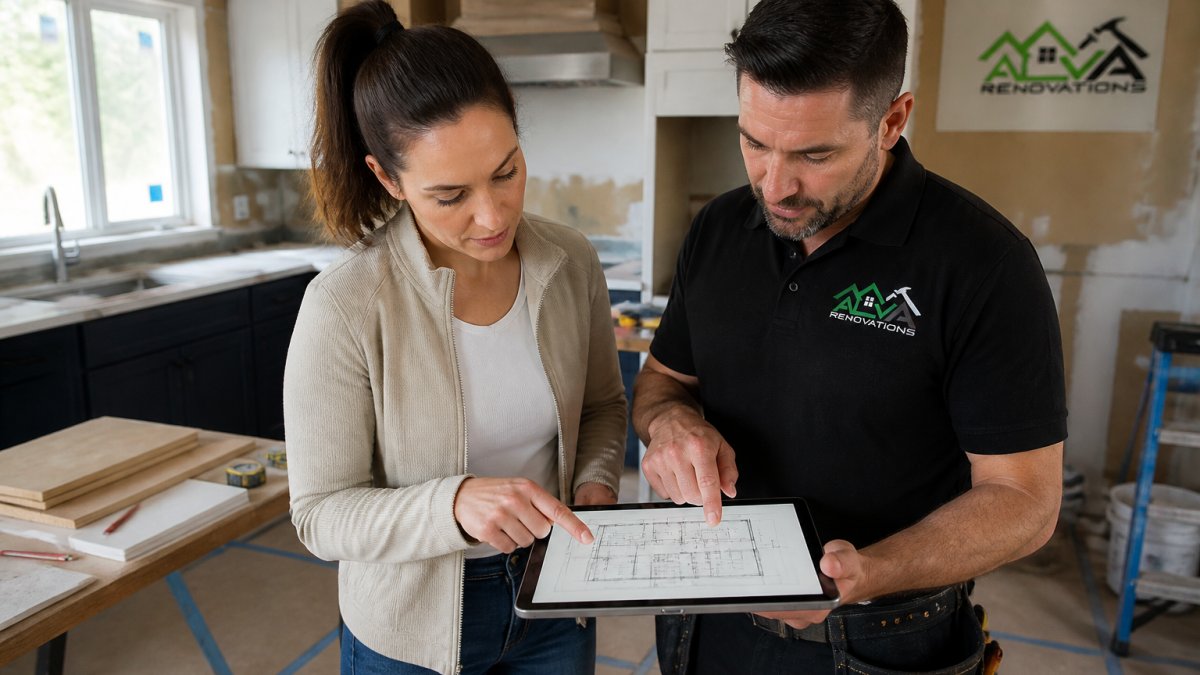
Clear communication means three things: regular updates, written decisions, and a single point of contact.
Set a communication schedule before work starts. Weekly check-ins are standard. Your contractor should provide a brief written update every Friday, what was completed, what’s planned for next week, any issues or delays.
Use written communication for all decisions. Verbal agreements disappear. Texts get misunderstood. A shared document or email trail creates accountability.
Assign one person as the decision-maker. If your spouse, your mother, and your best friend are all giving the contractor different instructions, work stops. One person approves changes. One person approves additional costs.
Your contractor should also tell you about problems immediately, not after they’ve compounded.
Order Materials Early and Verify Delivery Schedules
Material delays are now a standard part of renovation timelines. Global supply chain issues mean some items take weeks to arrive. Ordering early is your best defense.
Start ordering long-lead items 8-12 weeks before installation. This includes custom cabinets, special tile, appliances, and any items that must be ordered to specification.
Create a materials timeline that shows:
- Order date for each item
- Expected delivery date from supplier
- Arrival date at your home or job site
- Installation date scheduled around delivery
Verify delivery schedules directly with suppliers. Don’t rely on your contractor to track this. Call the supplier one week before the promised delivery date and confirm the shipment is on track. When materials arrive, inspect them immediately for damage or defects. A damaged shipment discovered after installation has started creates massive delays.
Keep a backup list of alternative materials in case your first choice is unavailable. If your preferred tile is backordered six months, you need a plan B that’s available now.
Plan for Unexpected Issues Without Derailing Your Timeline
Unexpected issues are guaranteed. The only question is how you’ll handle them.
When your contractor opens a wall and finds water damage, or discovers outdated electrical wiring that must be upgraded, your timeline is affected. The question is whether you’ve planned for this.
Budget 10-15% of your project timeline as contingency. If your project is scheduled for 12 weeks, plan for 14 weeks. This isn’t added cost, it’s realistic planning.
When issues arise, decide quickly. Delays happen when homeowners take weeks to decide whether to fix a problem or live with it.
Some issues can be deferred. If you discover outdated wiring in a wall that’s not part of your renovation, you can leave it and address it later. Other issues cannot be deferred.
Set a decision deadline. When your contractor identifies an issue, you have 24-48 hours to decide how to proceed. Longer delays compound the problem.
Common Mistakes That Cause Delays and How to Avoid Them
Most renovation delays fall into a few predictable categories. Knowing what to avoid helps you stay on track.
Mistake 1: Starting without a final design. Homeowners change their minds mid-project about layout, finishes, or fixtures.
Mistake 2: Underestimating permit timelines. Homeowners assume permits take a week. In reality, they take 3-4 weeks or longer.
Mistake 3: Not ordering materials early enough. Materials arrive late, and work pauses. Solution: Order long-lead items 8-12 weeks before they’re needed.
Mistake 4: Poor communication with contractors. Misunderstandings about scope, timeline, or expectations cause friction and delays. Solution: Establish a weekly communication schedule.
Mistake 5: No contingency for surprises. When something unexpected happens, the entire timeline shifts. Solution: Build 10-15% buffer time into your schedule.
Mistake 6: Changing your mind about scope mid-project. Adding work or changing specifications after demolition starts is expensive and slow.
Renovation delays often feel inevitable, but they’re not. At ALVA RENOVATIONS LLC, we focus on structured project management and clear communication with homeowners.
Frequently Asked Questions
What are the most common causes of renovation project delays?
The most common causes include incomplete design decisions before work starts, material shortages or late deliveries, unexpected structural issues discovered during demolition, permit delays, and poor contractor communication. Budget constraints affect whether projects proceed as planned; in 2025, 42% of homeowners cited budget limitations as a barrier to starting projects. Planning thoroughly upfront and maintaining clear communication with your contractor prevents most of these delays.
How can I keep my home renovation on schedule?
Use a detailed renovation project schedule template that includes every phase, material delivery dates, and inspection windows. Finalize all design decisions and material selections before work begins, order long-lead items early, and establish a regular communication schedule with your contractor. Build buffer time into your timeline for unexpected discoveries. Regular check-ins and written progress updates help catch delays before they compound.
How long does a home renovation take, and should I add extra time?
Timelines vary widely based on scope: a bathroom remodel typically takes 4-8 weeks, while a kitchen renovation may take 8-12 weeks or longer. Major whole-home renovations can take 6-12 months. Always add 10-20% buffer time to your contractor’s estimate to account for permit processing, material delays, or structural surprises. Discuss realistic timelines with your contractor upfront and get written confirmation in your contract.
What should I do if my contractor falls behind schedule?
Address delays immediately by having a direct conversation with your contractor. Ask for a written explanation of what caused the delay and a revised timeline. Review your contract terms regarding schedule penalties or compensation for extended project duration. If delays persist without resolution, document all communications and consider escalating to a project manager or mediator. Clear contractor communication during renovation prevents small delays from becoming major problems.
