

Last Updated: November 17, 2026
Quick Summary
Planning maintenance service needs means sorting work into preventive, routine, and reactive categories, then building a checklist and a recurring schedule for each property. Preventive work is usually cheaper than emergency repairs, so scheduling it ahead of time keeps costs and vacancy time under control.
- Property maintenance costs rose about 12% in 2024, according to TenantCloud Property Management Statistics 2026.
- Preventive maintenance is usually cheaper than reactive repairs that can damage nearby parts of the building.
- Test smoke and carbon monoxide detectors monthly and replace batteries yearly.
- Check HVAC filters every one to three months and schedule annual roof inspections and HVAC service.
- Set response targets by priority tier and make sure vendors can actually meet the times you publish.
Table of Contents
- Why Maintenance Service Needs Drive Property Costs
- Types of Rental Property Maintenance: Preventive, Routine, and Reactive
- Building a Property Management Maintenance Checklist
- Setting a Rental Property Preventive Maintenance Schedule
- Defining Service-Level Standards and Maintenance Budgets
- Using a Property Management Maintenance Service Needs Template
- Evaluating Rental Property Maintenance Services and Providers
- Scheduling Your Next Maintenance Review
- Frequently Asked Questions
Why Maintenance Service Needs Drive Property Costs
Maintenance service needs are one of the biggest expenses for any rental property. When a unit sits empty or a repair drags on, the owner loses money twice: once on the repair and again on rent. Property maintenance costs rose about 12% in 2024, according to TenantCloud Property Management Statistics 2026.
Tenant turnover makes the problem worse. Tenant turnover can be costly, so a poorly planned maintenance schedule can quickly become a financial drain. Planning ahead for maintenance service needs keeps both repair costs and vacancy time under control.
Most property managers handle this work themselves or through a coordinator. More than 80% of property managers are involved in coordinating or performing maintenance and repairs, based on iPropertyManagement industry statistics. That makes a clear plan for maintenance service needs a core part of the job.
Types of Rental Property Maintenance: Preventive, Routine, and Reactive
Rental property maintenance falls into three groups. Each one costs a different amount and asks for a different response.
- Preventive maintenance: Scheduled work that stops problems before they start, such as servicing HVAC units and cleaning gutters.
- Routine maintenance: Regular upkeep like painting touch-ups, filter changes, and landscaping.
- Reactive maintenance: Urgent repairs after something breaks, such as a burst pipe or a failed water heater.
Preventive work is usually cheaper than reactive work. Reactive repairs often cost more and can damage nearby parts of the building. Bathroom upkeep is a common example of routine work that can be planned in advance. For larger projects, a service such as bathroom remodeling services can handle updates that go beyond everyday fixes.
The three maintenance types differ in what they cover and how urgently they need a response.
| Maintenance type | Typical work | Cost and urgency |
|---|---|---|
| Preventive | Servicing HVAC units, cleaning gutters | Usually cheaper than reactive work |
| Routine | Painting touch-ups, filter changes, landscaping | Regular, planned upkeep |
| Reactive | Burst pipe, failed water heater | Urgent; often costs more and can cause damage |
Building a Property Management Maintenance Checklist
A good checklist keeps maintenance service needs organized and visible. It should list every unit and every system that needs regular attention.

Start with these core items:
- Smoke and carbon monoxide detectors: test monthly, replace batteries yearly
- HVAC filters: check every one to three months
- Plumbing: look for leaks under sinks and around toilets
- Electrical: test outlets and GFCI breakers
- Exterior: inspect roofs, gutters, and walkways
- Appliances: confirm stoves, refrigerators, and water heaters work
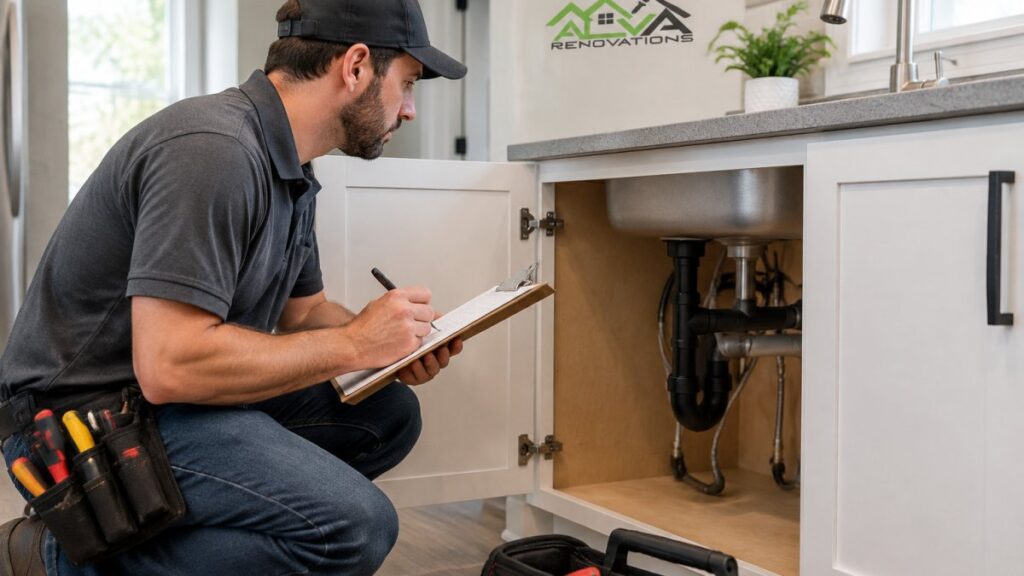
Walk each property with a clipboard or a digital form. Note what needs work and date each entry. This record helps you track patterns and plan the next visit.
Setting a Rental Property Preventive Maintenance Schedule
A preventive schedule turns the checklist into a calendar. Assign each task a frequency and a responsible person or vendor.
A simple pattern is:
- Monthly: Filter changes, detector tests, and quick walkthroughs
- Quarterly: Plumbing checks, gutter cleaning, and pest control
- Annually: Roof inspection, HVAC service, and water heater flush
Spread the work out so you are not handling every task in the same week. A steady schedule keeps costs predictable and reduces emergency calls. Review the schedule each year and adjust it based on what broke most often.
Defining Service-Level Standards and Maintenance Budgets
Service-level standards turn vague expectations into measurable commitments. Without them, a tenant’s ‘urgent’ and a vendor’s ‘soon’ never line up, and every delayed repair becomes a dispute. The most useful framework sets response and resolution targets by priority tier, then writes those targets into vendor agreements and tenant communications.
A practical four-tier standard looks like this:
- Emergency (life-safety or habitability): no heat in freezing weather, no water, sewage backup, gas smell, electrical hazard, or a lock that will not secure the unit. Acknowledge within 1 hour, dispatch within 2 to 4 hours, and stabilize the same day.
- Urgent: a failed appliance, a single non-functioning toilet, or a leak that is contained. Acknowledge within 4 business hours and schedule within 24 to 48 hours.
- Routine: cosmetic issues, minor drips, and non-critical appliance problems. Acknowledge within 1 business day and complete within 5 to 10 business days.
- Scheduled or preventive: filter changes, seasonal HVAC service, and inspections. Book on the maintenance calendar with a defined window.
These tiers are a starting benchmark, not a legal standard. Habitability rules and response obligations vary by jurisdiction and by lease, so confirm local requirements before publishing targets. The point is to publish something specific and then measure against it.
Watch out: if you promise same-day emergency response in a lease or marketing material but your after-hours vendor cannot actually deliver it, you have created a written record of a broken promise. Match published standards to contracted capacity.
Budgets should follow property type and age, not a single blanket percentage. A common planning pattern is to reserve a percentage of gross rent annually, plus a separate capital reserve for big-ticket systems. Track actual spending against the reserve each quarter and adjust when a category trends high.
A simple reserve formula: (annual gross rent × reserve percentage) + (per-unit capital set-aside × number of units). Review the result against the prior year’s actual repair invoices, and raise the reserve when reactive work keeps outpacing preventive work. Predictable standards and a funded reserve are what keep emergency calls from becoming budget crises.
Using a Property Management Maintenance Service Needs Template
A template saves time and makes records consistent across properties. It also makes it easier to compare needs from one building to the next.
A useful template includes these fields:
- Property address and unit number
- Date of request or inspection
- Type of work: preventive, routine, or reactive
- Description of the problem
- Priority level: emergency, urgent, or scheduled
- Assigned vendor and estimated cost
- Completion date and notes
Keep one template for all properties. Store completed forms in one shared location so anyone on the team can find them.
Evaluating Rental Property Maintenance Services and Providers
Choosing a provider is a two-part job: qualify before you hire, then measure after the work is done. Most owners do the first part loosely and skip the second entirely, which is why the same vendor problems repeat year after year.
Qualification before hiring. Build a file for each candidate and confirm:
- A valid state contractor license for the trade, verified through the state licensing board rather than the vendor’s own paperwork
- General liability insurance and workers’ compensation coverage, with a certificate of insurance naming you or the property entity as additional insured where appropriate
- Experience with rental properties, including tenant-occupied units and after-hours calls
- Written response-time commitments that match your service-level tiers
- Itemized written estimates that separate labor, materials, and trip charges
- At least two references from other property managers, not just homeowners
Comparing bids. Ask every vendor to quote the same scope so the numbers are comparable. A low bid that excludes permit fees, disposal, or a return trip is not actually lower. Request a breakdown of labor rate, after-hours premium, markup on parts, and diagnostic or trip fee.
Measuring performance after the work. Score each vendor on a simple quarterly scorecard:
- Response time: did they acknowledge and arrive within the committed window?
- First-time fix rate: how often was the issue resolved on the first visit?
- Callback rate: how often did the same problem return within 30 days?
- Cost versus estimate: did the final invoice match the approved estimate?
- Documentation: were photos, notes, and invoices submitted promptly?
Watch out: a vendor who is fast but has a high callback rate is often more expensive than a slower, thorough one once repeat trips and tenant complaints are counted. Weight first-time fix and callback rate heavily, not just speed.
Work orders, approvals, and follow-up. Every job should run through a written work order with a defined approval threshold, for example, work under a set dollar amount proceeds immediately, while anything above it requires owner sign-off. Require before-and-after photos and a completion note tied to the work order, then close the loop with the tenant. This record is also your defense if a repair is later disputed.
Technology that supports the process. A request portal, digital work orders, photo uploads, and status updates reduce missed requests and create an audit trail. Even a shared spreadsheet with timestamps beats phone calls and texts, because it produces the documentation that licenses, insurers, and courts expect. The goal is a repeatable loop: qualify, bid on equal scope, approve against a threshold, document completion, and score the vendor each quarter.
Scheduling Your Next Maintenance Review
Maintenance planning works best as an ongoing cycle. Set a date for your next review now, while the current checklist and schedule are fresh.
At each review, ask a few questions. Which repairs cost the most this year? Which vendors met their timelines? Which tasks did tenants report most often? Use the answers to update your checklist, schedule, and budget.
Reviewing regularly also protects your timelines. Clear planning helps you avoid renovation project delays and keeps larger jobs on track. Start your next review with a simple step: walk one property, update one checklist, and call one vendor to confirm availability. For estimates on repairs or upgrades, reach out to ALVA RENOVATIONS LLC and request a free estimate.
Frequently Asked Questions
What maintenance services do property managers need?
Most property managers need access to licensed plumbers, electricians, and HVAC technicians, along with general handymen for smaller repairs, pest control, landscaping, and janitorial or turnover cleaning. The right mix depends on the property’s age, building systems, and how many units you oversee. Matching providers to these recurring categories before a problem arises shortens response times and gives you predictable pricing. Many managers also keep a backup vendor for each trade so an urgent repair is never delayed by a single provider’s availability.
How often should rental properties be inspected?
Many property managers inspect each rental at least once a year, with extra visits after a tenant move-out and seasonal checks for heating, cooling, roofing, and drainage. Inspections should cover safety items such as smoke and carbon monoxide detectors, plus the common areas and exterior. Document each inspection with dated photos and notes so you can compare conditions over time. Adjust the frequency for older buildings or properties with a history of repeat repairs.
What should be included in a rental property maintenance checklist?
A practical checklist covers HVAC filters, water heater condition, plumbing leaks, electrical panels, smoke and carbon monoxide detectors, roof and gutter condition, exterior paint and siding, grounds and drainage, appliance function, and pest signs. Add tenant-reported items and any lease-specific obligations. Assign each task an owner, a due date, and a completion field. Review the checklist after each season so it reflects what actually failed in the past year.
How should property managers handle tenant maintenance requests?
Give tenants one submission channel, acknowledge each request within a set window, and classify it as emergency, urgent, or routine. Emergencies such as active leaks, no heat in winter, or electrical hazards should reach a vendor the same day. Record every request, the vendor assigned, the work performed, and the final cost. Follow up with the tenant once the work is complete to confirm the issue is resolved.
