


Table of Contents
- Understanding Contractor Types and Service Areas for Point Roberts
- How to Vet a Remodeling Contractor Before You Hire
- Questions to Ask a General Contractor During Consultation
- Comparing Contractor Estimates and Bid Evaluation
- Home Renovation Contract Checklist: What Must Be Included
- Managing Remote Project Oversight and Communication
- Protecting Yourself: Bonds, Liability, and Dispute Prevention
- Frequently Asked Questions
Last Updated: October 14, 2026
Understanding Contractor Types and Service Areas for Point Roberts
Hiring contractors for point roberts projects starts with knowing which professional handles what. General contractors oversee entire projects and coordinate subcontractors; specialists like electricians, plumbers, and painters handle single trades; remodeling contractors focus on kitchens and bathrooms.
Point Roberts presents unique logistical challenges: fewer contractors operate there regularly, and Bellingham-area general contractors who serve it build travel time and distance into their estimates. Verify a contractor actually works in your area rather than assuming they do because they’re licensed in the state.
The key to contractor selection, from simple repairs to full kitchen remodels, is knowing what to ask and verify before signing.
Consider scope first. A small bathroom refresh may need only a remodeling contractor; a full home addition requires a general contractor who can manage multiple trades and permits; commercial work demands commercial code experience.
Ask potential contractors directly: “Do you regularly work in Point Roberts, or would this be your first project there?” Their answer reveals whether they understand local logistics, permit requirements, and material access challenges unique to the area.
How to Vet a Remodeling Contractor Before You Hire
Vetting a remodeling contractor means checking credentials, experience, and references, but for a Point Roberts project, the standard checklist is not enough.
Step 1: Verify the license and registration. Confirm a current Washington State registration through the Washington Department of Labor & Industries contractor registry, which shows status, bond and insurance on file, and enforcement actions. A suspended, expired, or mismatched registration is a stop sign.
Step 2: Confirm they have actually worked in Point Roberts. Ask for the address or cross-street of at least one completed project in the area within the last two years, then ask what was hardest about it.
Step 3: Check references from comparable projects. Call at least three references and ask: Did they finish on time? Any surprise costs? How were problems handled?
Step 4: Verify insurance, bonding, and workers’ compensation. Request a certificate of insurance showing general liability coverage and proof of workers’ compensation. For larger projects, ask about a performance bond.
Step 5: Understand their cross-border and travel logistics. Point Roberts is reached by road through Canada or by water; there is no direct land route from the rest of Washington.
Step 6: Check reviews with a local lens. Look at Google and Better Business Bureau reviews for patterns, not isolated complaints. Repeated complaints about missed deadlines, poor communication, or surprise costs point to a real problem.
Ask every candidate the same two questions and compare the answers side by side: “Walk me through how you got materials and crew to your last Point Roberts job,” and “What did you wish you had known before your first project here?” The contractors who have real local experience answer in specifics. The ones who have not answer in generalities.
A contractor who passes all six steps is not just licensed, they are set up to finish your project in this location.
Questions to Ask a General Contractor During Consultation
The consultation is your chance to assess whether a contractor understands your project and communicates clearly. Start with scope: “Can you walk me through exactly what you’ll do, step by step?” Vague answers mean they haven’t thought through your situation.
Ask about crew and timeline: “Will you handle this personally or assign a crew?” “How long do similar projects take?” “What could delay it?” Honest contractors acknowledge surprises and don’t promise fixed timelines without contingency.
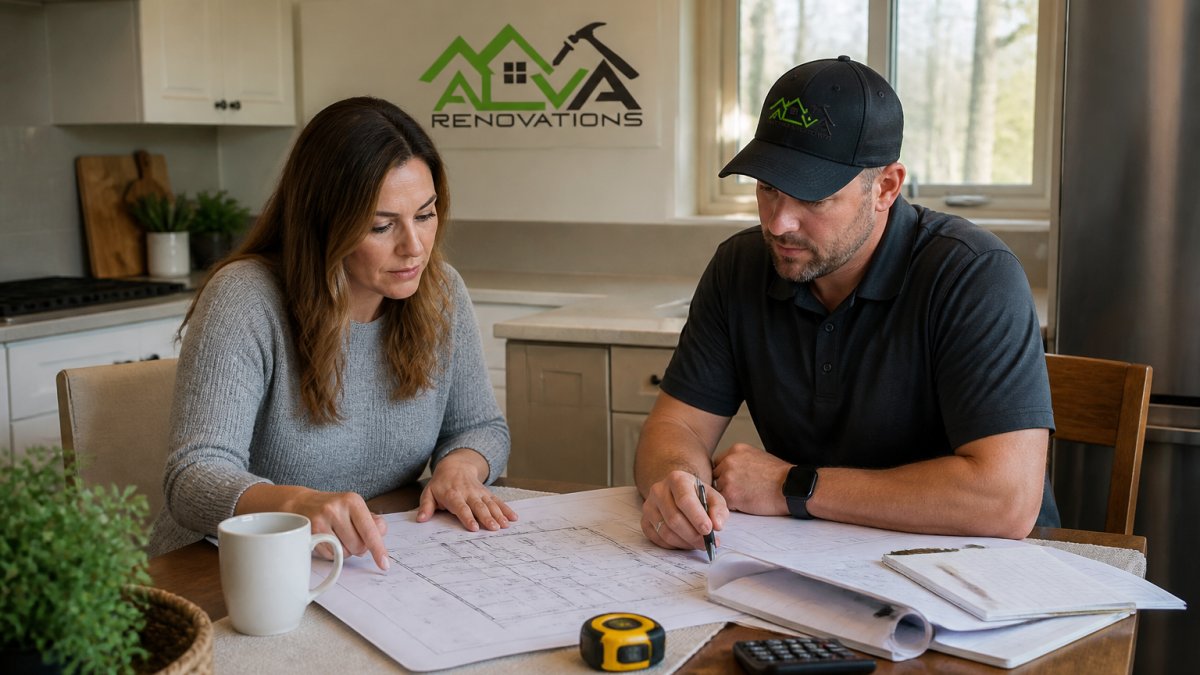
Discuss change orders: “If we find problems behind the walls, how do we handle it? Will you get my approval before proceeding?” Hidden damage, rotted framing, outdated wiring, and plumbing issues often emerge once work begins.
Ask about communication frequency: “How often will I hear from you?” “How do you handle questions?” Remote projects like those in Point Roberts require reliable communication, weekly check-ins should be standard.
Clarify payment terms. Most contractors ask a deposit (typically 30-50%), progress payments, and a final payment on completion. Avoid anyone demanding full payment upfront; staged payments protect you both.
Ask about cleanup and site management: “How will you manage debris and keep a safe work area?” “Will you protect my other rooms and belongings?” A professional takes responsibility for an organized site.
Comparing Contractor Estimates and Bid Evaluation
Never hire on the lowest bid alone. Three estimates from qualified contractors should differ somewhat; identical bids aren’t truly competitive. A significant gap (one bid 40% lower) warrants investigation, either the low bidder is cutting corners or the others are padding costs.
Compare what each estimate includes: one may bundle materials and labor, another separate them; one may include permits and inspections, another not. Ask for itemized estimates, not just a total.
Look at the detail. A vague estimate (“kitchen remodel: $45,000”) tells you nothing; a detailed one breaks down demolition, framing, electrical, plumbing, cabinetry, countertops, flooring, painting, and fixtures. Detail signals the contractor has thought your project through.
Ask about material choices. If the estimate specifies brands and grades, “Kohler fixtures,” “Quartz countertops by Cambria”, you know exactly what you’re getting. Vague descriptions like “quality fixtures” leave room for substitutions.
Consider warranty and guarantees. Some offer one-year labor warranties, others longer. Ask what’s covered and for how long.
| Estimate Element | What to Check | Red Flag |
|---|---|---|
| Itemization | Broken down by trade and material | Single lump sum with no detail |
| Material Specs | Brands and grades listed | Vague descriptions (“standard” or “quality”) |
| Timeline | Specific start and end dates | “Approximately X weeks” with no contingency |
| Payment Terms | Staged payments tied to milestones | Full payment upfront or 50% deposit |
| Permits & Inspections | Included in estimate or clearly separated | Unclear who handles permits |
| Warranty | Labor warranty period specified | No warranty mentioned |
Home Renovation Contract Checklist: What Must Be Included
A written contract protects both you and the contractor, never proceed without one. It must include project scope, timeline, payment schedule, and change order process.
The scope section should describe exactly what work will be done. “Kitchen remodel” is too vague.
Include start and completion dates with contingency language: “Estimated completion: [date], subject to change if unforeseen conditions arise.” This protects the contractor if hidden problems delay the project.
Specify payment terms clearly. Example: “30% upon signing, 35% when framing/rough-in complete, 35% upon final completion and inspection.” Tie payments to project milestones, not calendar dates.
Include a change order clause. “Any changes to the scope must be approved in writing by both parties before work begins. Change orders will specify the cost and timeline impact.” This prevents disputes over unexpected work.
Address problems discovered during work: “If structural damage, code violations, or other unforeseen conditions are discovered, the contractor will notify the homeowner immediately with a written estimate for remediation before proceeding.”
Include a dispute resolution clause. Many contracts specify arbitration instead of litigation, which is faster and cheaper: “Any disputes will be resolved through binding arbitration under [state] law.”
Require proof of insurance and bonding before work begins. “Contractor must provide current proof of general liability insurance and workers’ compensation coverage before any work commences.”
A contract missing payment milestones or change order procedures is a liability. Contractors who refuse to put terms in writing are signaling they’re not professional. Walk away.
Managing Remote Project Oversight and Communication
Point Roberts projects require intentional communication because you cannot drop by daily, and because the site sits behind a border crossing. The plan below covers standard remote-project habits plus location-specific logistics.
Set a communication protocol before work starts. Weekly calls or video work better than email for quick problem-solving.
Require regular progress photos. Weekly photos show accountability and create a record for warranty and insurance. Ask for the same angles each week so you can compare progress.
Schedule in-person visits at key milestones. Be on site before demolition, after rough-in, before drywall closes the walls, and before final inspection. These visits catch issues when they are cheaper to fix.
Plan material delivery around the border. This is where remote Point Roberts projects most often go sideways.
Confirm inspection and permitting logistics. Permits and inspections go through the local jurisdiction, and inspectors travel to the site like everyone else.
Plan for weather and seasonal access. Point Roberts gets the region’s coastal weather, wind, rain, short winter days, and exterior work is weather-dependent.
Confirm utilities and site access. Verify power, water, and any temporary utilities are available and who arranges them.
Use a shared project document. A simple spreadsheet or online tool tracking milestones, decisions, change orders, and open issues, updated by both parties, creates a written record and prevents miscommunication.
Establish clear escalation procedures. Agree in advance: “If I have a concern, I will raise it within 24 hours.
Do not assume that a contractor who is organized locally will be organized remotely. The Point Roberts-specific failure points, border delays, material delivery, inspection scheduling, weather, are the ones that turn a well-run project into a stalled one. Confirm the plan for each before work begins, not after a problem appears.
A remote project succeeds on logistics, not intentions. The contractor who can explain in specifics how they will move people, materials, and inspections to and from the site is the one who finishes on schedule.
Protecting Yourself: Bonds, Liability, and Dispute Prevention
Bonds and insurance are non-negotiable. A performance bond compensates you if the contractor abandons or fails to complete the job; payment bonds ensure subcontractors and suppliers get paid, preventing liens against your property.
General liability insurance protects you if someone is injured on your property or the contractor damages your home; workers’ compensation covers employees injured on the job. Without it, you could be liable.
Verify insurance limits. Standard general liability is $1 million per occurrence; for larger projects, request higher limits. Ask your insurance agent what coverage to require.
Understand lien laws. In Washington State, contractors and subcontractors can lien your property if unpaid. Require a “lien waiver” from the contractor and all subcontractors before final payment, confirming they’ve been paid and won’t file a lien.
Keep detailed records: contracts, change orders, payment receipts, photos, and communication. If a dispute arises, documentation is your best defense.
Consider mediation before litigation. Mediation is faster and cheaper than court. Many contracts include mediation clauses requiring both parties to attempt resolution before suing.
Hiring contractors for point roberts projects demands more due diligence than local work, but the process is straightforward: check credentials, get detailed estimates, ask the right questions, and put everything in writing. Clear communication and transparent processes separate successful projects from frustrating ones.
Washington Department of Labor & Industries Contractor Registry
Better Business Bureau guide to hiring contractors
Consumer Reports contractor hiring checklist
Frequently Asked Questions
How do I verify a contractor’s license and insurance before hiring?
Request proof of current licensing through your state’s contractor board or licensing authority. Ask for a Certificate of Insurance showing general liability and workers’ compensation coverage. Contact the insurance provider directly to confirm the policy is active. For contractors working in Washington, verify registration with the Department of Labor & Industries. A licensed, insured contractor reduces your liability if someone is injured on your property or if work doesn’t meet code.
What should I check before hiring a residential contractor for a Point Roberts project?
Verify licensing, insurance, and bonding status. Request references from similar projects and contact them directly. Check online reviews and ratings from past clients. Confirm they have experience with projects in remote or rural areas and understand cross-border logistics. Ask about their process for handling unexpected issues behind walls. A contractor with local experience and clear communication systems is essential for projects at a distance.
How can I tell whether a contractor’s references are reliable?
Contact references directly, don’t rely on the contractor’s summary. Ask about timeline adherence, budget control, how the contractor handled surprises, and overall professionalism. Request references from projects similar in scope to yours. Ask if the homeowner would hire the contractor again. Check whether references are recent (within the last 2 years). Be cautious of references who seem rehearsed; genuine feedback often includes both strengths and minor areas for improvement.
What happens if a contractor finds hidden damage during my renovation?
Your contract should specify a process for handling change orders and unexpected costs. Require the contractor to notify you immediately, provide a written estimate for the additional work, and wait for your approval before proceeding. Establish a contingency budget (typically 10-15% of the project cost) to cover surprises. A clear contract prevents disputes and timeline blowups. Discuss this scenario upfront so both parties understand how decisions will be made if walls or systems need repair.