

Table of Contents
- Why Hiring the Right Contractor Matters for Rental Properties
- Where to Find Reliable Contractors for Rental Maintenance
- Questions to Ask a Contractor Before Hiring
- Verifying Licenses, Insurance, and References
- Contractor Estimate Comparison: What to Evaluate
- Landlord Contractor Red Flags to Avoid
- Creating a Rental Property Maintenance Contract Template
- Building a Long-Term Vendor Network
- Frequently Asked Questions
Last Updated: October 12, 2026
Why Hiring the Right Contractor Matters for Rental Properties
Finding qualified professionals through hiring contractors for rental property maintenance is one of the most important decisions you’ll make as a landlord. The wrong contractor can damage your investment, create tenant disputes, and drain your budget. The right one becomes a trusted partner who protects your property and keeps tenants happy.
At ALVA RENOVATIONS LLC, we’ve worked with property managers across the region who’ve learned this lesson the hard way. A contractor who disappears mid-project, cuts corners on repairs, or overcharges for simple fixes costs far more than their inflated invoices suggest.
The stakes are higher with rental properties than owner-occupied homes. You’re managing multiple units, coordinating with tenants, and balancing upkeep costs against rental income. A reliable contractor simplifies that process. They show up on time, communicate clearly, and deliver quality work that lasts. That’s not a luxury, it’s essential to running a profitable rental business.
Where to Find Reliable Contractors for Rental Maintenance
Referrals and Word-of-Mouth Recommendations
The most trusted source is always someone who’s already used a contractor successfully. Ask other landlords and property managers in your network who they trust. These recommendations come with real experience attached, they’ve seen the work, paid the invoices, and dealt with follow-ups.
Property management groups, local real estate investment clubs, and landlord associations are goldmines for referrals. Members share names of contractors they use repeatedly. More importantly, they’ll tell you which ones to avoid. A contractor who’s been recommended by five different landlords has proven their reliability across multiple jobs.
Online landlord forums and community groups work too. Post a question asking for contractor recommendations in your area. You’ll get candid feedback, people don’t hesitate to warn others about bad experiences. Look for contractors mentioned by multiple people, especially if those people manage similar properties.
Online Directories and Review Sites
Google Maps, Yelp, and Angie’s List let you search by service type and location. Read recent reviews carefully. Focus on comments about responsiveness, quality, and fair pricing. Look for patterns, one complaint might be an outlier, but three complaints about the same issue signals a real problem.
Check how contractors respond to negative reviews. A professional acknowledges the issue and explains how they fixed it. Someone who gets defensive or ignores complaints won’t handle problems well on your job either.
Review sites show licensing information and insurance details for many contractors. That’s a quick way to do initial screening before you even call. Some sites let you request quotes directly and compare multiple contractors side by side.
Questions to Ask a Contractor Before Hiring
Before you hire any contractor for rental property maintenance, ask these questions:
Experience and Track Record
- How long have you been doing this type of work?
- Do you have experience with rental properties specifically?
- Can you provide references from other landlords?
Availability and Responsiveness
- How quickly can you respond to emergency repairs?
- What’s your typical timeline for routine maintenance jobs?
- How do you handle communication during a project?
Licensing and Insurance
- Are you licensed in this state for your trade?
- Do you carry liability insurance and workers’ compensation?
- Can you provide proof of current coverage?
Pricing and Estimates
- Do you provide written estimates before starting work?
- How do you handle unexpected problems found during repairs?
- What’s your payment schedule, deposit, progress payments, or full payment at completion?
Project Management
- How do you coordinate with tenants if they’re in the unit?
- Do you clean up after yourself?
- Will you provide a warranty on your work?
Ask these questions over the phone first. Their answers reveal how organized and professional they are. If someone gets annoyed by basic questions or can’t answer clearly, that’s a red flag.
Verifying Licenses, Insurance, and References
Never skip this step. A contractor’s license, insurance, and references tell you whether they’re legitimate and reliable.
Check Licensing
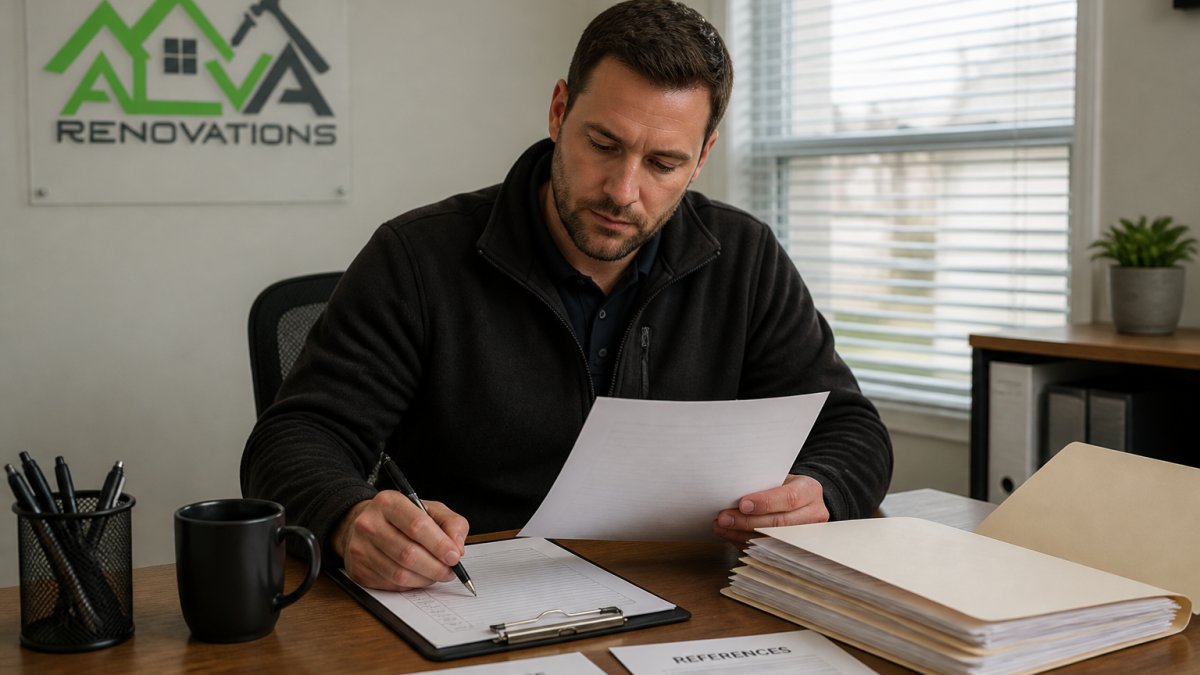
Every state requires contractors to be licensed for major work. Your state’s contractor licensing board has a searchable database. Look up the contractor’s name and license number. Verify the license is current and active. Check for any complaints filed against them.
Verify Insurance
Liability insurance protects you if someone gets hurt on your property (Commercial general liability insurance). Workers’ compensation insurance covers the contractor’s employees. Ask the contractor for proof of both. Call the insurance company to confirm coverage is active, don’t just accept a copy of the certificate.
Check References
Call at least three references. Ask specific questions:
- How long ago did you use this contractor?
- What was the scope of work?
- Did they finish on time and on budget?
- Would you hire them again?
Ask for references from jobs similar to yours. A contractor who excels at painting might struggle with plumbing. Request recent references, someone they worked for within the last year.
Contractor Estimate Comparison: What to Evaluate
Getting multiple estimates is standard practice. But comparing them correctly requires looking beyond the bottom-line number.
Breaking Down Labor and Repair Costs
A detailed estimate separates labor costs from materials. Materials are usually straightforward, the cost of parts and supplies. Labor is where contractors differ most. Some charge hourly rates. Others quote a flat fee for the entire job. Some use a combination.
Ask the contractor to break down labor by task. How many hours do they estimate for each step? What’s their hourly rate? This shows whether they’re padding estimates or pricing fairly. If one contractor quotes 20 hours for a job and another quotes 10, ask why. The difference might reveal experience levels or work quality.
Don’t assume the lowest estimate is the best deal. A contractor quoting significantly less than others might cut corners, use cheaper materials, or underestimate the work required. When estimates cluster in a similar range with one outlier low, that’s a warning sign.
Comparing Scope of Work and Timeline
Make sure each estimate covers the same scope. One contractor might include cleanup and hauling away debris. Another might charge extra for that. One might include a warranty on parts. Another might not. These differences add up.
Ask about timeline. How long will the job take? When can they start? Will they work around tenant schedules? For rental properties, you need to know how the work affects occupancy. A contractor who can schedule work during tenant turnover is more valuable than one who needs the unit vacant for days.
Get everything in writing. An email confirming the scope, timeline, and price protects both of you. If the contractor won’t put it in writing, that’s a red flag.
Landlord Contractor Red Flags to Avoid
Certain warning signs indicate a contractor isn’t trustworthy or professional.
Cash-Only Payments
Legitimate contractors accept checks, credit cards, or bank transfers. Cash-only payments suggest they’re avoiding taxes or hiding income. It also leaves you with no record if something goes wrong.
No License or Insurance
If they can’t or won’t provide proof of licensing and insurance, walk away. You’re exposing yourself to massive liability. If they get hurt, their injury becomes your problem.
Pressure to Pay Upfront
Some contractors ask for full payment before starting. That’s unreasonable.
Vague Estimates
An estimate should list specific work, materials, labor costs, and timeline. If it says “repairs as needed” or “labor TBD,” don’t sign it. You need to know what you’re paying for.
Poor Communication
How a contractor responds to your initial calls and emails predicts how they’ll communicate during the job.
No References or Bad References
If a contractor can’t provide references, that’s a problem. If references say the work was poor or the contractor was difficult, believe them.
Creating a Rental Property Maintenance Contract Template
A written agreement protects both you and the contractor. It clarifies expectations and gives you recourse if something goes wrong.
Essential Contract Clauses and Payment Safeguards
Your contract should include:
Scope of Work
List every task the contractor will perform. Be specific: “Replace kitchen faucet with Delta model X” is better than “fix kitchen sink.” Include materials, finishes, and brand names if relevant.
Timeline
State the start date and expected completion date. Include milestones for multi-phase projects. This prevents indefinite delays.
Payment Terms
Specify the total price, deposit amount, and payment schedule. Example: 25% deposit due upon signing, 50% due when work is half complete, 25% due upon completion.
Change Orders
Work sometimes reveals problems, water damage behind walls, structural issues, or code violations.
Warranty
State how long the contractor guarantees their work. Common warranties are 30-90 days for labor. Materials might carry manufacturer warranties. Document this clearly.
Cleanup and Site Conditions
Specify that the contractor will remove debris daily and leave the property clean.
Insurance and Liability
State that the contractor carries liability insurance and will provide proof. Specify that they’re responsible for damage they cause.
Termination Clause
Include language allowing you to terminate the contract if the contractor fails to perform. State what happens to payment if you terminate, usually you owe for completed work only.
Emergency Repairs vs. Routine Maintenance Workflows
Emergency repairs need fast response. Routine maintenance can be scheduled. Your contract should address both.
Emergency Repairs
Define what qualifies as an emergency: no heat, no water, electrical hazards, or safety issues. State your contractor’s response time for emergencies, ideally within 24 hours. Have a backup contractor for when your primary one isn’t available. Emergency repairs often cost more because they interrupt other work, and that’s acceptable. But get approval before starting work when possible.
Routine Maintenance
Schedule routine work in advance. Examples include seasonal HVAC maintenance, gutter cleaning, or preventative inspections. Routine work can be batched with other jobs to save costs. Specify a window for completion rather than an exact date, “within the first two weeks of March” works better than “March 15th.”
Building a Long-Term Vendor Network
The best contractors become part of your team. They understand your properties, your standards, and your budget. Building relationships with reliable contractors takes time but pays off enormously.
Start with one contractor for each major trade: plumbing, electrical, HVAC, general repairs, and painting. Use them repeatedly on different properties.
Document everything. Keep records of every job: what was done, when, the cost, and how the work held up. Track which contractors deliver quality work on time and on budget.
Communicate expectations clearly. If you want a contractor to check in daily, say so. If you need them to coordinate with tenants, make that clear upfront.
Pay on time, every time. Contractors who work for landlords that pay reliably will prioritize your calls. They’ll fit you in when they’re busy.
Hiring contractors for rental property maintenance is one of your most important landlord responsibilities. The right contractor protects your investment, keeps tenants satisfied, and saves you money over time.
Frequently Asked Questions
What are the main red flags when hiring a contractor for rental property maintenance?
Watch for contractors who demand full payment upfront, lack verifiable licenses or insurance, refuse to provide references or written estimates, communicate poorly, or pressure you to make quick decisions. Avoid anyone unwilling to put the scope of work and timeline in writing. A reliable contractor will be transparent about costs, responsive to questions, and willing to discuss payment schedules tied to project milestones.
What should a rental property maintenance contract template include?
A solid contract covers the scope of work with specific details, labor and material costs, project timeline and start/completion dates, payment schedule (never full upfront), cancellation terms, insurance and liability coverage, warranty on work performed, and communication expectations. Include a clause for handling unexpected issues discovered during work, how change orders are handled, and dispute resolution. Have an attorney review it to ensure compliance with local regulations.
How many contractor estimates should you get before hiring?
Aim for at least three written estimates from different contractors. This gives you a realistic range for costs and allows you to compare scope, timeline, and professionalism. Be cautious of estimates that are significantly lower than others, they may indicate cut corners or hidden costs later. Use estimates to ask follow-up questions and clarify what’s included in each bid.
How can I verify a contractor’s license and insurance before hiring?
Ask the contractor directly for their license number and insurance certificate, then verify independently. Contact your state’s licensing board or contractor licensing authority to confirm the license is current and in good standing. Call the insurance company listed on the certificate to confirm coverage is active. Request references from recent rental property jobs and follow up with at least two of them. Document everything in writing.